

( guide · hospitality )
What a hotel website needs.
By Aaryaman Mascarenhas, founder of EVOKE ·
A good hotel website does two things: it makes a guest feel the place before they arrive, and it makes booking the easiest thing on the page, especially on a phone. Everything else, from rooms and location to reviews, speed and being found by search engines and AI assistants, serves those two.


- The rooms, shown
- in the light they are seen
- Booking in reach
- fewer taps to a date
- Fast on a phone
- where trips are planned
What should the first screen do?
Make the place felt: the light at the hour guests remember, the view, the thing they will photograph. A hotel sells a feeling, and the first screen is where that feeling is kept or broken. A slideshow of rooms says "hotel"; one strong image or scene says "this hotel".
Where should booking go?
One move away, on every screen. On a phone that means a book or reserve button that stays in reach, dates that are easy to pick with a thumb, and no detour through a page of text. A guest who has decided should never have to look for the button.
What do guests look for next?
The rooms, shown in real light and at real size; where the place is and how to get there; what is nearby; the rates or where to check them; and proof from other guests. Each should be one move from the first screen.
Why does speed matter more for hotels?
Because many guests are on a phone, often travelling, often on mobile data. A heavy hero video that takes seconds to appear loses them before the feeling lands. Big images and film can be used, but they must not block the first screen.
How do hotels get found by AI assistants?
Travellers now ask assistants for a quiet boutique hotel near somewhere. Assistants lean on pages that say plainly what the place is, where it is and who it suits, on details that match across the web, and on reviews. A hotel site should say those things in words, not only in pictures, and mark them up with structured data.
A hotel website checklist
The feeling first
One strong image or scene of the place, not a slideshow.
Booking in reach
A reserve button on every screen, and dates that are easy to pick on a phone.
Rooms in real light
Each room type with honest photographs, its size and what is included.
Where and how
The location, a map, and how to get there from the airport or station.
Proof
Real reviews from real guests, linked to where they were left.
Fast on a phone
The first screen appears quickly, even on mobile data.
Words for search and AI
What the place is, where it is and who it suits, in plain words and in structured data.
Where you can see it
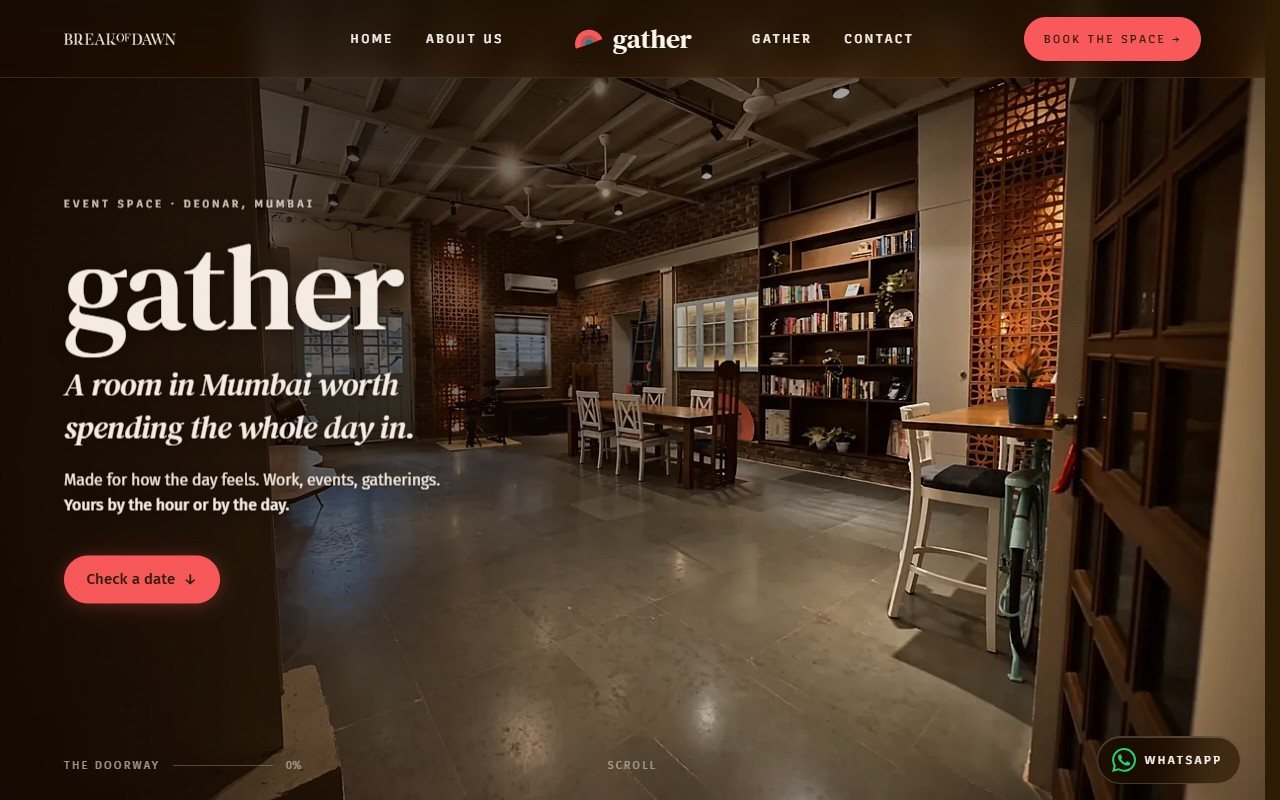
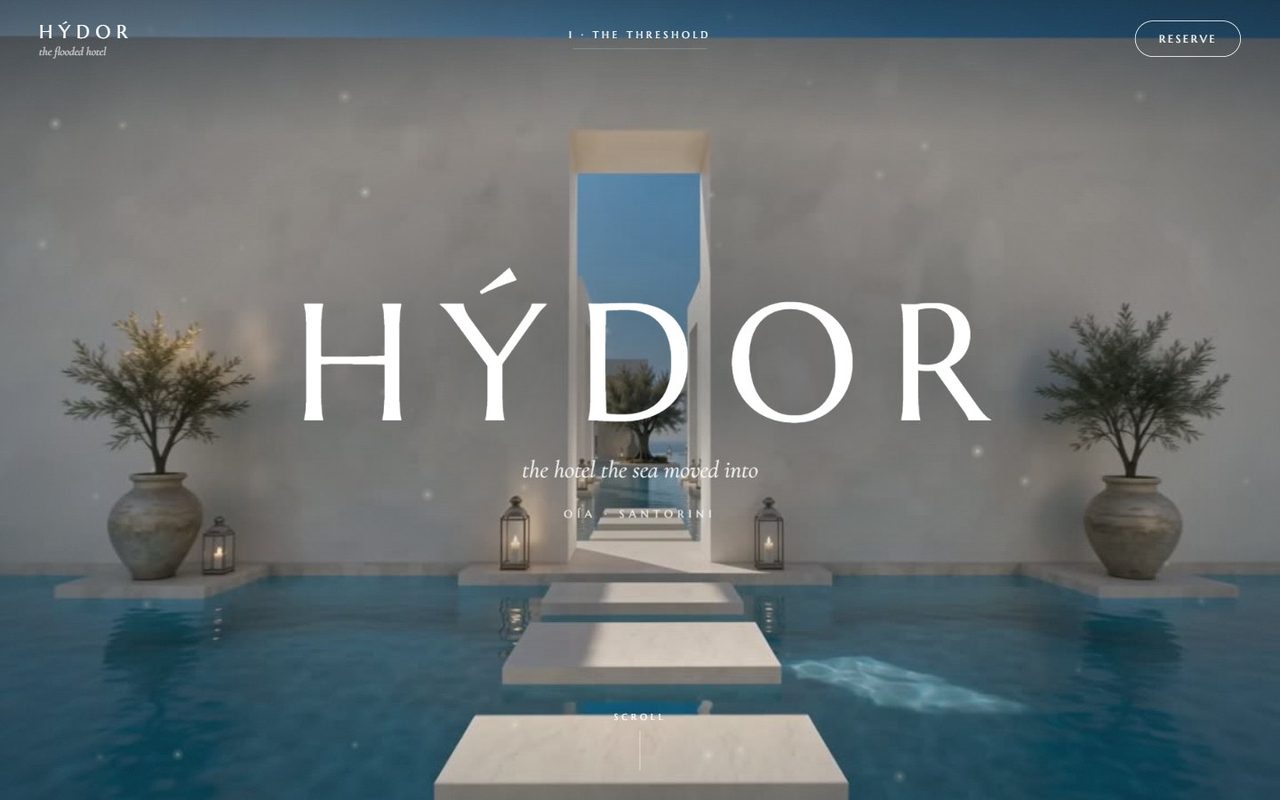
Hýdor, a personal hotel concept set in Santorini: the site is told in chapters, the sea rises as you scroll, and "reserve" stays at the top of every screen. Gather, a day-use room in Mumbai, opens on the room in afternoon light with one button: check a date.
Questions people ask
What makes a good hotel website?
A first screen that makes the place felt, booking one move away on every screen, rooms shown honestly, a clear location, real reviews, and a page that loads fast on a phone.
Should a hotel website have a video?
It can, if the video does not block the first screen. Show a still first and let the film load behind it, or guests on mobile data wait for nothing.
Do you design websites for hotels in India?
Yes. EVOKE designs and builds websites for hotels, day-use spaces, restaurants and venues in India and abroad, from Vadodara and Mumbai.
One call is usually enough to know whether it is a fit.